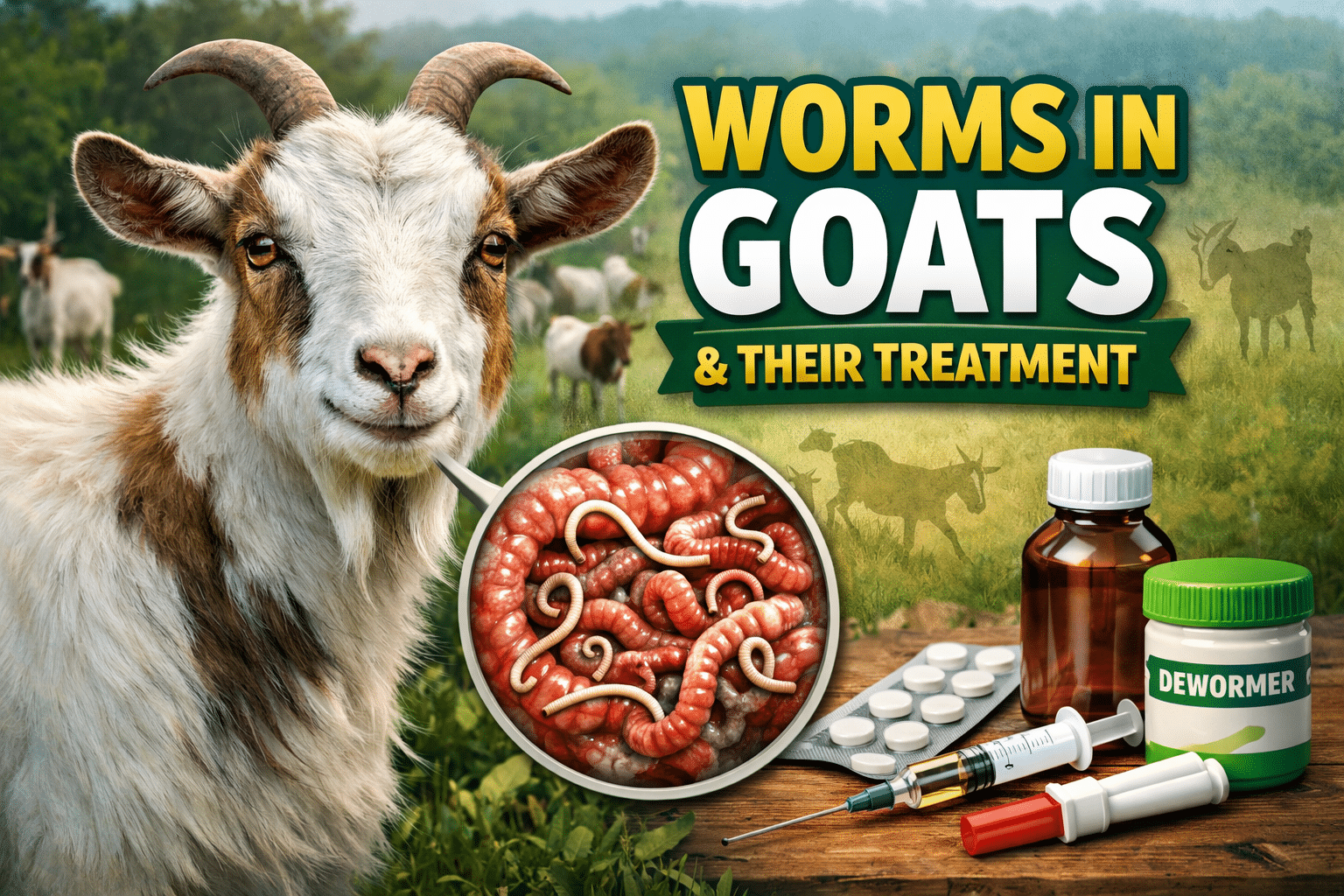
Worms in goats are internal parasites that live in the digestive system of goats which are spreadable. Goat’s Warms can cause weight loss, poor growth, body damage, and economical loss of farmers. Worms in goats have many causes, such as dung housing, overgrazing, and lack of regular deworming. In severe cases, worms may even lead to death if not controlled on time.
Worms in goats are common disease in sheep and goat in the USA. Worms in goats are generally treatable with proper medicines and good care. Good precaution includes clean sheds, fresh water, pasture rotation, and regular health checks. Careful management and early treatment can keep goats healthy and protect farm production.
TYPES OF WORMS IN GOATS
There are 5 types of worms in goats, such as roundworms, trichostrongylus, ostertagia, cooperia, and strongyloids. Each of them is unique, and they live in different organs of the goats.
Roundworms
Roundworms are internal parasites that live inside a goat’s stomach, intestines, and sometimes lungs. They feed on blood and nutrients, which makes goats weak and unhealthy.
Trichostrongylus
Trichostrongylus is another type of worm found in goats, which is a small roundworm that lives in the small intestine of goats and sometimes the stomach.
Ostertagia
Type of worm in goats, also known as brown stomach worm. It lives in the abomasum (true stomach) of goats.
Cooperia
It is a small intestinal roundworm found in the small intestine of goats. It belongs to the group of parasites named nematodes.
Strongyloides
The less harmful types of worms in goats are strongyloides, which are also named threadworms. It is a small roundworm that lives in the small intestine and can also enter through the skin.
Signs and Symptoms of Worms in Goats
Common symptoms of worm infestation in goats include diarrhea, weight loss, anemia, bottle jaw, loss of appetite, weakness, and pale eyelids. These signs usually develop gradually and may not be noticeable in the early stages, but they become more visible as the number of worms increases. It causes loss of appetite due to the presence of worms in the stomach and intestines (Haemonchus Contortus).
It is particularly with stomach and intestinal worms which cause the abdominal issue for goats. The feces may be soft in some cases. Young goats are especially affected by severe diarrhea, which can quickly lead to dehydration. Over time, this leads to weight loss. Some goats may show constipation or irregular bowel movements. Even if the goat is eating well, it may still lose weight because worms interfere with digestion and prevent proper absorption of nutrients.
Bottle jaw
Swelling under the jaw, commonly known as bottle jaw, could be a clear symptom of heavy worm infestation. This swelling is caused by low protein levels in the blood due to chronic blood and protein loss from worm infection. The fluid appears under the jaw, giving the area a soft appearance. Bottle jaw often indicates a severe problem and should never be ignored.
Anemia
It is a serious sign, especially with blood-sucking worms like barber pole worms. As these worms feed on blood, the goat gradually becomes anemic. This can be noticed by checking the color of the gums or the inside of the lower eyelid, which appears pale or almost white instead of healthy pink.
Rough/dull hair coat
The coat condition of the goat also changes noticeably. Worms in goats often have a rough, dull, and dry hair coat instead of a smooth and shiny one. The hair may stand up. This poor coat quality reflects malnutrition (lack of nutrition in the body) and poor health caused by the worms draining essential nutrients from the body.
Less milk production
In milking goats, decreasing in milk production can be a symptom of worms in goats. The milk yield may decrease gradually or suddenly, and the quality of milk may also suffer. This happens because the goat’s body starts prioritizing survival over milk production when nutrients are being lost to worms. Breeding animals may also show poor fertility, delayed heat cycles, or reduced conception rates due to overall poor health.
Ascites
Another symptom of warm in goat is Ascites. its a condition where fluid accumulates in the abdominal cavity, often due to parasitic, liver, or heart issues. In this condition, the goat’s stomach looks swollen, tight, and pot-bellied because fluid has collected inside. Normally, there should be no free fluid in the abdomen. When disease affects organs like the liver, heart, kidneys, or intestines, fluid leaks out and collects in the abdominal cavity. Symptoms also include difficulty breathing and loss of appetite.
Respiratory infection
Respiratory signs can appear if lungworms are involved. In such cases, the goat may cough frequently, especially after exercise or while grazing. Breathing may become difficult, and nasal discharge may be seen. These goats often look thin and weak and may be misdiagnosed as having a respiratory infection when the real cause is worms.
Extreme weakness
In very severe infestations, especially when left untreated, goats may show signs of extreme weakness, collapse, or sudden death. This is usually due to severe anemia, dehydration, or organ failure caused by the heavy worm burden. Often, death can occur without many warning signs, highlighting the importance of early detection and regular monitoring.
Symptoms in Young Goats
Young goats are particularly vulnerable to worm infestation and often show more severe symptoms. They may have potbellies, stunted growth, diarrhea, and extreme weakness. Their growth slows down, and they fail to gain weight at a normal rate. In severe cases, kids may collapse or die suddenly if the infestation is not treated in time.
DIAGNOSIS OF WORMS IN GOATS
Diagnosing worms in goats requires careful observation of symptoms, thorough physical examination, and appropriate laboratory testing to confirm the presence of parasites. Because no single sign alone can confirm the problem. The first step in diagnosis of worms in goats usually begins with close observation of the goat’s overall condition and behavior. Goats that lose weight despite eating well show poor growth, or look dull and inactive raise the risk of worm infestation. Changes in appetite, reduced milk production, and poor body condition are often early signs.
Physical Examination
To conduct a physical examination of worms in goats, one commonly used method is checking the color of the gums or the inside of the lower eyelid. In healthy goats, this area appears pink or reddish, while in goats suffering from blood-sucking worms, it becomes pale or whitish due to anemia. This method helps assess the severity of blood loss and is especially useful in areas where barber pole worms are common. Swelling under the jaw, known as bottle jaw, is another physical sign of worms in goats. It strongly suggests heavy worm infestation and low protein levels in the blood.
Feces Examination
Feces is one of the most reliable ways to diagnose worms in goats. Fresh fecal samples are collected and examined in a laboratory using microscopic techniques to identify worm eggs. This process, commonly called a fecal examination, helps determine whether worms are present and gives an idea of the level of infestation. The number of eggs found can suggest whether the worm burden is light, moderate, or heavy. However, it is important to understand that egg counts may not always perfectly match the number of worms in the body, especially in early infections or during certain stages of the worm’s life cycle.
Fecal Egg Count Test
Fecal egg count test used to monitor the effectiveness of deworming treatments for worms in goats. By comparing egg counts before and after treatment, veterinarians can determine whether the medicine is working properly or if there may be resistance to a particular dewormer. This is an important diagnostic tool in modern goat management, as drug resistance has become a growing problem.
Observation of Cough Patterns
Another way to diagnose worms in goats is to observe the patterns of coughing. In cases where lungworms are suspected in goats, diagnosis may include observing coughing patterns, breathing difficulty, and poor exercise tolerance. Special fecal tests may be needed to detect lungworm larvae, as their eggs are not always easily visible with routine examination. Sometimes, a veterinarian may rely on a combination of clinical signs and response to treatment to confirm the diagnosis.
Blood Tests for Worm Detection
Blood Test can also help in diagnosing worm infestation in goat, particularly in severe cases. Low red blood cell counts and low protein levels in the blood support the diagnosis of heavy worm infection, especially when combined with physical signs like pale gums and bottle jaw. Although blood tests do not identify the specific type of worm, they help assess how badly the goat’s body has been affected.
Treatment of Worms in Goat
Worms in Goat treatment mainly involve the use of deworming medicines such as benzimidazoles, macrocyclic lactones, probiotics, and digestive aids. These medications help eliminate internal parasites and support the goat’s digestive health.
However, deworming drugs should always be used under the guidance of a qualified veterinarian, as each medicine targets specific types of worms. For example, albendazole is mainly effective against certain stomach worms, while other drugs may be required for different parasites. In addition, proper precautions—such as correct dosage, age of the animal, health condition, and stage of pregnancy—must be carefully considered to ensure safe and effective treatment in ruminants like goats..
- Benzimidazole
These medicines are effective against many roundworms.
- Albendazole – It works against stomach and intestinal worms. Not safe for early pregnancy.
- Fenbendazole – Safe and very common medicines for roundworms.
- Macrocyclic Lactons
These are the strong dewormers and also have the capability to control the external parasites.
- Ivermectin – Effective against many gastrointestinal worms and lung worms.
- Moxidectin – Stronger than ivermectin and used where resistance exists
- Imidazothiazoles
- Levamisole – It’s very effective against barber pole worms but it must be given carefully because overdose can be toxic for animals sensitive to Imidazothiazoles.
Deworming supplements:
Some common deworming supplements for worms in goats
Probiotics & Digestive Aids
Probiotics will help restore healthy gut flora after deworming. It’s useful in reducing diarrhea and improving digestion.
Prebiotics
Support beneficial gut bacteria growth and improve the overall gut health of goats.
Mineral & Vitamin Supplements
Worms in goats can cause weakness and anemia. Some supplements can help like,
Iron – It is helpful for anemia (especially with barber pole worms).
Vitamin B complex – It supports the metabolism and appetite of the worms in goats .
Vitamin E + Selenium – boosts immunity and reduces stress.
Multivitamins – One of the general body support. It is rich in protein which helps goats repair tissues and build immune strength.
Herbal Dewormers (Traditional Support)
Some growers use herbal products to help reduce worm loads:
Garlic, pumpkin seeds, neem leaf, papaya seed meal, and tannin-rich forages (like chicory or sainfoin).
Effectiveness varies and should be used with veterinary guidance.
Prevention of Worms in goats
Preventing worm infestations in goats requires proper management, hygiene, and regular health care practices. Providing goats with timely and balanced feeding, maintaining clean and dry housing, conducting regular health checkups, and separating infected animals are essential steps to control the spread of parasites. Routine deworming every 3–4 months is one of the most effective methods for preventing worm infections and maintaining herd health.
Proper grazing management also plays a key role in worm prevention. Rotating grazing areas helps reduce parasite contamination in pastures and prevents overgrazing. Overgrazing can stress goats, weaken their immune system, and make them more vulnerable to worm infestations. Additionally, keeping goat sheds clean, dry, and well-ventilated minimizes the risk of parasite development and helps ensure the overall health and productivity of goats.
Regular health monitoring, such as using the FAMACHA scoring system, allows early detection of anemia caused by worms. By checking the color of the goat’s eyelids, farmers can identify health issues at an early stage—healthy goats show pink eyelids, while pale color indicates anemia and the need for treatment. These preventive measures together help maintain herd health, improve productivity, and reduce the risk of parasite infestation.
Conclusion: Worms in Goats
Worms in goats are a common health problem that can seriously affect growth, milk production, and overall health if not managed timely. Regular observation of symptoms such as weight loss, diarrhea, pale eyelids, and weakness helps farmers detect worms in goats at an early stage. Balanced nutrition also strengthens the goats’ immunity against parasites. Using tools like FAMACHA scoring can guide timely treatment. Consistent preventive care is the key to maintaining a healthy and productive goat herd.
Managing worms in goats requires awareness, hygiene, and regular veterinary guidance. Following preventive practices can greatly reduce losses and improve animal performance. Healthy goats lead to more milk, and economic benefits. Continuous care and monitoring ensure long term success in goat farming.
FAQ’s: Worms in Goats with complete Guide
What are Worms in Goats?
Warms in goats are Internal parasites that affect digestion, lungs, weight loss, anemia, diarrhea and bottle jaw.
How to know if a goat has worms?
Pale gums, anemia, bottle jaw (swelling under the jaw), diarrhea, weight loss, dull hair coat, weakness.
How many types of worms in goats are there?
There are 5 types of worms in goats, such as roundworms, trichostrongylus, ostertagia, cooperia, and strongyloids
Do worms affect young goats?
Yes, young goats are affected from worm infestation and often show more severe symptoms.
How to prevent goats from worms?
Worms in goats require proper management, hygiene, and regular health care practices.
Which medicines are used to treat worms in goats?
Benzimidazole, Macrocyclic Lactons (Ivermactin), Imidazothiazole are used to treat Worms in Goats.
Do Supplements help to Treat Worms in Goats?
Yes, supplements like Iron, Vitamin B complex, Vitamin E + Selenium can help to treat worms in goats.