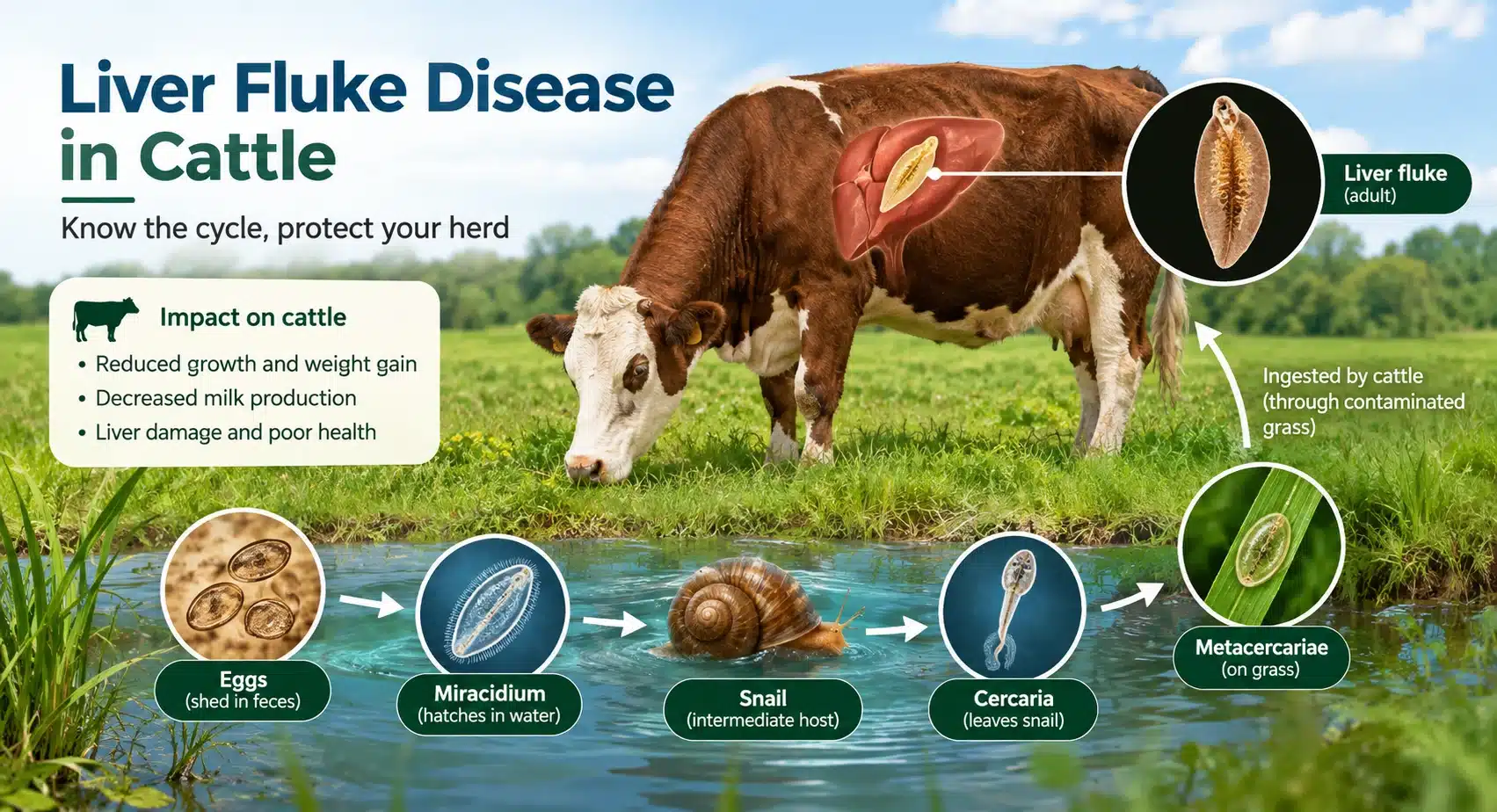
Liver fluke in cattle is a common parasitic disease that can easily go unnoticed in the early stages. It is mainly caused by the common liver fluke, Fasciola hepatica, which damages the liver and bile ducts of infected animals. Over time, liver fluke disease in cattle can result in poor growth, reduced milk production, and a clear drop in overall herd performance.
Cattle usually become infected when they graze on contaminated pasture or drink water from wet, marshy, or poorly drained areas. These kinds of damp conditions allow the parasite to survive and spread more easily. After entering the animal’s body, the immature flukes travel through the liver tissue, causing damage and irritation along the way before eventually settling in the bile ducts.
As liver fluke in cattle develops, animals may start to lose weight, appear weak, produce less milk, and show signs of poor body condition. In many cases, the disease builds up slowly, which means the early signs are often easy to overlook. By the time the symptoms become clear, the liver may already be under significant stress.
Liver fluke in cattle can impact both the health of animals and the overall farm income, so it’s important to understand it as early as possible. When farmers know how liver fluke in cattle spreads and what signs to look out for, it becomes much easier to take timely action and protect the long-term health of the herd.
Symptoms of liver fluke in cattle
Cattle liver fluke symptoms usually develop slowly and can be easy to miss in the early stages. First signs of Liver fluke in cattle are gradual weight loss, even when the animal is still eating normally. Infected cattle may appear weak, dull, and less active, with a clear drop in energy levels. These early symptoms of liver fluke infection often develop slowly, so farmers may not notice them until the disease has already advanced.
As the disease moves forward, anemia becomes more obvious in affected cattle. You can usually notice it through pale gums and paler inner eyelids. With time, the loss of protein in the body can cause swelling under the jaw, which farmers often call bottle jaw.Farmers also observe these symptoms in other worm problems in cattle because liver fluke is a parasitic infection.
Digestive issues can also start to appear in affected cattle. You may notice some animals passing mild diarrhea and showing signs of slight abdominal discomfort. Farmers often see these as typical symptoms of worms in cows. Although they may not look serious at first, they can still weaken the animal and reduce overall productivity over time.
Causes of Liver Fluke in Cattle
Liver fluke disease in cattle is caused by a parasitic flatworm known as Fasciola hepatica. This parasite belongs to the Fasciolidae family and mainly attacks the liver and bile ducts of cattle, as well as sheep and goats.
The spread of liver fluke in cattle depends on its life cycle, with freshwater snails acting as the intermediate host. The parasite grows inside these snails first. After that, it becomes capable of infecting cattle. You mostly find this happening in wet, marshy, or poorly drained areas where snails are already present, and cattle grazing there end up getting exposed more easily.
Cattle usually become infected when they graze on pasture contaminated with the infective stage of the parasite or drink contaminated water. Once inside the body, the immature flukes move through the liver tissue and cause damage along the way. After that, they settle in the bile ducts, where they grow and mature into adult parasites.
Adult flukes release eggs that pass through the feces into the environment. These eggs continue the liver fluke lifecycle under suitable conditions, especially in moist environments.
In some areas, the disease is informally referred to as “liver fluke,” but it is a parasitic infection caused by Fasciola hepatica.
Diagnosis of Liver Fluke in Cattle
Detecting liver fluke in cattle early is really important to keep their health and productivity on track. The infection often develops slowly, so farmers can easily miss it in the early stages. Farmers usually rely on a mix of observing the animals, doing lab tests, and, in some cases, checking postmortem findings to get a clearer understanding of the disease.
Fecal Sedimentation Test
The fecal sedimentation test is one of the most common ways to confirm liver fluke infection. This test looks for liver fluke eggs in feces, which are oval, golden-brown, and operculated. This test only works once the parasites are mature, so very early infections might not show up. Despite this, regular fecal checks are useful for monitoring the herd and deciding when to treat.
ELISA Tests
ELISA tests are quite useful when it comes to picking up liver fluke infection earlier than normal testing methods. Blood ELISA can detect antibodies against Fasciola hepatica, while coproantibody ELISA may even show infection through fecal samples before eggs are visible.Farmers in dairy herds sometimes use bulk milk testing to get a rough idea of whether infection is present in a large portion of the animals. With these tests, farmers get a chance to respond earlier instead of waiting for the infection to spread further.
Biochemical Testing
Blood tests to check liver enzymes can also give useful clues about the animal’s liver condition. When gamma-glutamyltransferase (GGT) levels are higher than normal, it often points to liver damage caused by migrating flukes. These tests are not only helpful for detecting infection but also for understanding how serious the damage is, which helps in deciding the right treatment plan.
Postmortem Examination
Postmortem examination is considered the most reliable way to confirm liver fluke infection. Infected livers may show both immature and adult flukes directly in the tissue. The bile ducts often appear thickened and may show fibrosis or even calcification, which are typical signs of long-term infection. Inspection of livers at slaughterhouses is also useful, as it helps indicate how widespread liver fluke is in a herd and provides valuable information for better herd management.
Liver Fluke Treatment in Cattle
Treating liver fluke in cattle involves using the right drugs that can target the parasite at different stages of its life cycle. Giving treatment on time reduces liver damage and helps animals gradually regain strength. Milk yield and body weight improve once farmers control the infection. Along with fluke treatment, farmers should provide proper nutritional support so cattle can recover better and stay healthy.
Triclabendazole
Triclabendazole is one of the most commonly used medicines because it kills all stages of liver flukes, from very young juveniles to fully grown adults.
- What it does: Removes flukes before they cause serious liver damage
- Product Example: Fasinex® 240 mg/ml Oral Suspension
- Dose: 10 mg per kg body weight, given orally
- Why it’s used: It works on both early and chronic infections and is a reliable treatment for liver flukes.
- Extra info: Severe infections may need a second dose after 12–14 days
Albendazole
Albendazole mainly targets adult flukes and also helps control intestinal worms.
- What it does: Kills fully grown flukes and common worms
- Product Example: Valbazen® 10% Oral Suspension
- Dose: 7.5–10 mg per kg body weight, orally
- Why it’s used: Best for mature infections, often used as a cattle wormer for liver flukes
Closantel
Closantel works on flukes that are older than very young juveniles but not fully grown adults.
- What it does: Removes flukes several weeks old
- Product Example: Closamectin®
- Dose: 10 mg/kg body weight, orally or subcutaneously
- Why it’s used: Useful when other treatments of flukes can’t cover all stages
Nitroxynil
Nitroxynil targets late immature and adult flukes.
- What it does: Removes flukes several weeks old or adults
- Product Example: Trodax®
- Dose: 10 mg/kg body weight, subcutaneously
- Why it’s used: Helps get rid of liver flukes effectively in the herd
Clorsulon
Clorsulon is effective only against adult flukes.
- What it does: Kills fully grown liver flukes
- Product Example: Ivomec® Plus (Clorsulon combination)
- Dose: Follow the product instructions
- Why it’s used: Ideal when other liver fluke infection treatment options aren’t suitable
Oxyclozanide
Oxyclozanide also helps in targeting adult flukes, usually in late-stage infections.
- What it does: Eliminates adult liver flukes to prevent further damage
- Product Example: Zanil® Drench
- Dose: 10 mg/kg body weight, orally
- Why it’s used: Helps clear any remaining flukes as part of flukes medication
Nutritional Supplements
Even after treatment, cattle may remain weak and underproductive. Adding the right supplements helps restore strength, weight, and milk production:
- Protein supplements: Help rebuild muscle strength and support healthy weight gain
- Product Example: Molasses-based protein blocks such as Livestock Protein Blocks
- How to use: 200–300 g per animal per day or free-choice
- Vitamin and mineral supplements: These help with liver repair and also support the animal’s immunity
- Product Example: Multimin® or similar mineral mix that contains selenium, zinc, and copper
- How to use: Mix into feed or administer as a bolus, following the instructions on the product label
- Iron supplements: Used in cases of anemia linked with fluke infection
- Product Example: Iron dextran injection
- Dose: 1–2 ml per 50 kg body weight, given either intramuscularly or subcutaneously
Using liver fluke treatment in cattle along with these supplements ensures animals recover faster, regain strength, and return to normal production.
Prevention of Liver Fluke in Cattle
Preventing liver fluke in cattle is mainly about reducing exposure and staying consistent with control steps. Try to avoid grazing in wet, marshy areas where the risk is higher, and use fluke medicines at the right time of the year. Regular liver fluke treatment in cattle plays a big role in keeping infection levels low and preventing them from spreading within the herd. Routine monitoring and timely treatment for flukes help reduce the parasite burden, and treating new animals before they join the herd also supports effective liver fluke infection treatment and better long-term herd health.
Strategic Flukicide Treatment
Giving liver fluke treatment in cattle at the right time works best for controlling the infection effectively. Farmers often give a flukicide dose at housing to remove flukes picked up during grazing.In high-risk areas, farmers usually prefer products that can also target immature flukes.Farmers should also treat newly purchased cattle before mixing them with the herd to improve control and make fluke treatment more effective overall.
Grazing Management
Grazing management has a big impact on controlling liver fluke in cattle. Try to keep cattle away from wet and marshy pastures, as these areas carry a higher risk of infection, especially during certain times of the year.
Avoid grazing cattle together with sheep, because this can make it easier for the infection to spread. Moving cattle between pastures instead of keeping them in one place also helps reduce exposure. Letting fields dry out before using them again can lower the chances of infection and support better treatment for flukes, while helping to gradually get rid of liver flukes from the pasture.
Snail Habitat Control
Controlling snail habitats is one of the simple but very important ways to reduce liver fluke in cattle. Since snails usually live in wet and muddy areas, it helps to fence off marshy patches, ponds, and waterlogged fields so cattle cannot graze there. Improving drainage is also useful, as it removes standing water and makes the environment less suitable for snails to survive.
Keep an eye on your fields, especially after rain or irrigation, and manage any wet patches before they become a problem. Drier, well-maintained pastures make it harder for flukes to survive and help get rid of liver flukes from the environment while lowering the need for repeated treatment for flukes.
Monitoring and Testing
Regular monitoring is really important for liver fluke in cattle because it helps catch the problem before it spreads too much. Most farmers start with fecal checks to look for liver fluke eggs, although blood and coproantigen tests can sometimes detect it earlier. In practice, you also start noticing small changes in the herd, like slow weight gain or a drop in milk production. Abattoir reports are also sometimes used to get an idea of how common the infection is in a particular area. Farmers get better results when they pick up the infection early, as treatment for flukes works more effectively and fluke medication controls the infection much better.
Biosecurity and Quarantine
When bringing new cattle onto your farm, keep them separate from the main herd and treat them with a cattle wormer for liver flukes before mixing. Quarantine new animals for 2–3 weeks so farmers can monitor their health and ensure timely treatment for flukes clears any hidden infection.
During this period, it’s best to avoid grazing cattle on shared pastures, since there is a risk they could spread parasite eggs. Simple biosecurity steps like this help protect the whole herd. Treating new animals early before they are mixed with the rest of the herd helps reduce the risk of spreading infection. Together, these practices keep cattle healthier in the long run.
Conclusion
Liver fluke in cattle can quietly impact herd health and productivity if it is not managed in time. Getting a clear understanding of liver fluke infection in cattle is important. Farmers should also notice the early symptoms. Timely liver fluke treatment in cattle plays a key role in preventing serious damage to the herd.
Simple prevention steps like proper grazing management, controlling wet areas, regular monitoring, and good biosecurity help reduce infection risk. Combining these with the right treatment for flukes makes it easier to control the disease, get rid of liver flukes, and maintain healthy, productive cattle.
