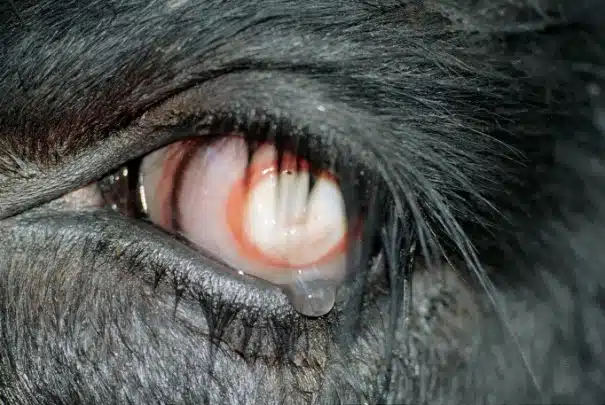
Bovine pinkeye (infectious bovine keratoconjunctivitis) is one of the most common painful eye disease in cattle. It is an infection that mainly affects the clear part of the eye (cornea) and the inner eyelid (conjunctivitis).
Moraxella bovis (Bacteria) is the primary factor in Infectious Bovine Keratoconjunctivitis. Factors such as flies, dust, wind, intense sunlight, tall grass, weakened immunity, and other infections exacerbate Pink Eye disease in cattle. If cattle show symptoms such as red eyes, tearing, and pain, it may indicate pink eye disease.
Pink eye in cattle is not something you want to put off dealing with. Getting on top of it early with the right treatment and prevention steps can save you a lot of trouble down the road, for both you and your cattle.
Bovine pink eye is a painful condition that can seriously threaten a cow’s eyesight if left untreated. When it gets bad, the animal starts to lose weight, productivity drops, and the farmer faces higher vet bills, extra care costs, and the very real risk of it spreading to the rest of the herd.
Pink Eye in Cattle Symptoms
Pink eye disease (Infectious Bovine Keratoconjunctivitis) symptoms in cows include watery eyes, red eyes, frequent blinking, irritation, and avoidance of sunlight due to eye pain. Tears running down the face and eyelid swelling are also common. Many animals rub their faces against posts or the ground due to irritation, which is often linked to conjunctivitis in cows (an inflammation that causes the eyes to be sore and highly sensitive).
As things get worse, the signs become harder to miss. The eye starts to turn cloudy or gray, and a small white spot appears in the center. That spot can turn into a corneal ulcer pretty quickly, and within 48 to 72 hours, the whole eye can look bluish-white or hazy from the swelling. In some cases, pus builds up inside the eye, giving it a yellowish or milky appearance. On top of that, the pain makes it difficult for the animal to eat properly or to graze as it normally would.
In severe cases, blood vessels begin to spread across the cornea as the body tries to repair the damage on its own. When deep ulcers are left untreated, the eye becomes extremely fragile and can actually rupture, leaving the animal permanently blind. Even when healing does occur, scarring tends to persist and can affect vision over the long term. On top of all the eye damage, the constant pain and difficulty eating cause cattle to lose weight, grow weaker, and produce noticeably less milk over time.
Causes of Pink Eye in Cattle
Infectious bovine keratoconjunctivitis (IBK) is mainly caused by the bacterium Moraxella bovis. This organism is a Gram-negative, rod-shaped bacterium from the family Moraxellaceae. It carries delicate, hair-like structures called pili that help it adhere firmly to the cornea.
Once attached to the cornea, the bacterium releases cytotoxins (MbxA cytotoxin) that damage the protective cells of the cornea and conjunctiva. This leads to eye irritation, redness, cloudiness, and, in severe cases, ulcer formation. Cases of pinkeye in calves are often more serious because young animals have weaker immunity.
Other organisms, such as Mycoplasma bovoculi and Branhamella ovis, and viruses such as IBR (Infectious Bovine Rhinotracheitis), can weaken the immune system and make things a whole lot worse. That said, Moraxella bovis remains the main culprit in most cases of the disease.
Predisposing Factors for Pink Eye in Cattle
Face flies are one of the biggest reasons pink eye spreads through a herd so fast. They feed on the moisture around the eyes, pick up bacteria from one cow, and carry it straight to the next, which is how outbreaks tend to get out of hand pretty quickly.
Dust is one of those things that quietly does a lot of damage before anyone notices. It wears down the eyes’ natural defenses and leaves cattle far more open to infection than they should be. Sprinkling water on dry areas, rotating pastures regularly, and keeping numbers down in dry pens are all straightforward steps that go a long way in keeping the problem in check.
Out in the pasture, tall grass, weeds, or rough hay can scratch a cow’s eye, allowing bacteria to enter. Housing conditions also matter—dry air or strong ammonia can irritate the eyes and make cattle more susceptible to infection.
Calves and young animals are at higher risk because their immune systems are not fully developed, so they can’t fight off the disease as strongly as adults. Cattle with white or unpigmented skin around the eyes, like Herefords, are more sensitive to sunlight and often suffer more from pink eyes. Finally, when animals are kept in crowded housing, they are in close contact, allowing bacteria to spread quickly from one cow to another.
Bovine Pink Eye Treatment
Treatment of pink eye in cattle begins with antibiotics like oxytetracycline and florfenicol, which do the heavy lifting by going after the bacteria causing the infection. Anti-inflammatory medications are given alongside them to bring the swelling and irritation down. Getting the pain under control, clearing the infection, and shielding the eye are really what the whole treatment process comes down to.
In severe cases, an eye patch or cover may be used to protect the eye and speed healing. Supportive care—such as providing shade, clean feed, and effective fly control—helps cattle recover faster and reduces the spread of the disease.
The first step in treating pink eye in cattle is to use appropriate antibiotics to control the infection. In mild to moderate cases, topical options such as oxytetracycline or Terramycin can be applied directly to the eye every 8–12 hours.
When the infection gets more serious, injectable antibiotics are really where you start to see better results. Long-acting oxytetracycline or tulathromycin tend to be the go-to choice in these situations since they hit harder and keep working for longer. There are also cases where penicillin is injected directly into the conjunctiva to target the bacteria as close to the source as possible.
When things get really bad and deep corneal ulcers develop, a vet may need to step in with procedures such as a third-eyelid flap or temporary eyelid sutures to shield the eye and give it a chance to heal. In more controlled settings, autologous serum eye drops are sometimes added to help the cornea repair itself. Some farmers do turn to natural remedies for a bit of extra support, but always use them alongside proper antibiotic treatment, never as a replacement for it.
Pain Management and Inflammation
Antibiotics are given immediately after the bacteria, while anti-inflammatory drugs are given at the same time to reduce swelling and make the animal a bit more comfortable.
Once antibiotics are started, keeping pain and inflammation under control becomes just as important for helping cattle recover faster. Non-steroidal anti-inflammatory drugs like flunixin meglumine do a good job of easing the discomfort and helping the animal feel a whole lot better through the healing process.
When eye inflammation gets really bad, apply 1% atropine ointment to help ease those painful eye spasms. Just keep treated animals in the shade, as the ointment can dilate their pupils.
Protect the Eye
Keeping the affected eye protected really does make a difference in how fast the animal recovers. A cattle pinkeye patch or a shaded resting area helps block flies, dust, and sunlight while also reducing the risk of infection spreading through the herd. Supportive products like Curicyn pink eye or cow pink eye spray can also help keep the eye clean and promote faster healing.
Keeping a close eye on the animal every day is really important. Watch for signs that things are getting better, such as reduced redness, reduced discharge, and ulcers starting to heal. Most cases clear up within 7 to 14 days.
If the eye keeps worsening or shows no signs of improvement, or if several animals are not responding to treatment, it is time to call a vet to rule out other infections or possible antibiotic resistance. Sticking to proper antibiotic treatment, protecting the eye, and providing good supportive care gives cattle the best chance of a full recovery and helps avoid permanent eye damage or blindness down the road.
Prevention and Management of Pinkeye in Cattle
Pink eye is a transmissible disease. It requires a combination of measures that protect the eyes from infection and reduce the spread within the herd. Effective prevention of pink eye disease in cows is based on controlling flies, managing pastures and dust, administering timely vaccinations, providing proper nutrition, and maintaining good herd practices.
Prevention through Fly Control
Face flies are really the main reason pink eye spreads so fast through a herd. They feed on the secretions around the eyes and nose and carry the bacteria straight from one animal to the next. Keeping them under control during fly season with insecticide ear tags, pour-on treatments, sprays, or back rubbers can make a big difference in cutting down the spread.
Regularly cleaning up manure and wet areas helps a lot, since flies tend to lay their eggs in fresh dung. Giving cattle access to shade not only reduces eye irritation from sunlight but also prevents them from bunching together, which tends to draw even more flies to their faces.
Pasture and Environmental Management
Properly managing your pasture and surroundings goes a long way toward preventing pink eye from becoming a problem. Tall grasses, weeds, and seed heads can scratch and irritate the eyes, so staying on top of mowing and weed control is something you really cannot afford to skip.
Dust is one of those things that quietly does a lot of damage before anyone notices. It wears down the eyes’ natural defenses and leaves cattle far more open to infection than they should be. Sprinkling water on dry areas, rotating pastures regularly, and keeping numbers down in dry pens are all straightforward steps that go a long way in keeping the problem in check.
Trees, shelters, or shade cloth do more than block out harsh sunlight. They also help bring down fly pressure and keep stress levels in check. Windbreaks are worth setting up, too, since they help reduce both dust and UV exposure. All of these things together create a much healthier environment for your cattle and go a long way toward reducing the risk of a pink eye outbreak.
Vaccination as a Preventive Tool
Vaccination plays an important role in reducing pink eye outbreaks in cattle, but getting the timing right determines how well it works. Vaccinate your cattle 3 to 6 weeks before fly season begins, including calves, and follow the label directions for booster shots, or consult your vet.
Most commercial vaccines out there target Moraxella bovis. Some also cover M. bovoculi, providing your herd with additional protection. They may not prevent pink eye from appearing altogether, but they do tend to make cases less severe. They also help cattle recover faster and slow their movement through the herd.
When commercial vaccines aren’t doing the job, vets sometimes recommend autogenous vaccines instead. These are custom-made from bacteria collected right on the farm and often give much stronger results. For the best outcome, combining vaccination with good fly control and proper pasture management makes a big difference. Solid nutrition, on top of that, is really what gives your herd the strongest overall protection.
Role of Nutrition
Nutrition plays a direct role in how well cattle resist pink eye and how quickly they bounce back if they do get infected. A strong immune system needs the right vitamins and trace minerals to keep the eye’s surface healthy. Without them, the body has much more difficulty fighting off bacteria.
- Vitamin A plays a major role in maintaining the health of eye tissues and mucous membranes. When cattle don’t get enough of it, their eyes tend to dry out. This makes them a lot more prone to injury and infection. Feeding good-quality green forage or adding vitamin A supplements during the dry season goes a long way. It helps keep their eyes healthy and strong year-round.
- Zinc plays a role in wound healing and tissue repair. It helps minor scratches on the eye surface heal quickly before bacteria can invade.
- Copper is vital for immune function and helps maintain the strength of connective tissues, reducing susceptibility to irritation.
- Selenium, often paired with vitamin E, enhances overall immunity and reduces oxidative stress, thereby improving resistance to infections such as pinkeye.
Offering free-choice mineral supplements or fortified rations is a good way to ensure cattle receive these nutrients. Doing this consistently really does make a difference in their overall health. This matters even more in regions where soils and forage don’t naturally contain enough of them. Salt-mineral blocks on their own often fall short of what the herd actually needs. Loose mineral mixes tend to do a much better job of covering all the bases.
Hot weather, heavy fly pressure, and weaning all put extra strain on cattle. That is exactly when their nutrition needs to be on point. Keeping their feed balanced, minerals topped up, and water clean helps take the stress off. It also strengthens their immune system and lowers the chances of a pink eye outbreak.
Biosecurity and Herd Management
Good biosecurity measures go a long way toward preventing pink eye from entering your herd in the first place. Keep any newly arrived heifers separate for at least two weeks before mixing them with the rest of the cattle. Use that window to run health checks and deworm them. Sort out their vaccinations and arrange any parasite treatment they might need.
Move any animal showing watery eyes or squinting to a sick pen right away. That alone does a lot to cut down fly activity. It also helps prevent the infection from spreading to the rest of the herd. Disinfect equipment such as halters, nose tongs, dehorners, and gloves after each use. Or better yet, keep a separate set aside just for sick animals.
Overcrowding and poor ventilation build up stress and high pressure fast. Rough handling only makes things worse. Staying on top of vaccination, parasite control, and nutrition keeps the herd healthy, strengthens immunity, and gives cattle a much better chance of fighting off infections.
Conclusion
Infectious Bovine Keratoconjunctivitis, also known as pink eye in cattle, is a painful and highly contagious disease. It takes a real toll on both animal welfare and farm productivity. Moraxella bovis is mainly behind it. Flies, dust, sunlight, tall grass, and a weak immune system all make things a whole lot worse.
Spotting it early and treating it with antibiotics and pain relief makes a big difference. Proper eye protection is what stands between a full recovery and permanent damage or blindness.
Prevention is really where the best results come from. Staying on top of fly control and keeping pastures well managed goes a long way toward preventing outbreaks. Using a pink eye vaccine for cattle at the right time adds even more protection for your herd. Maintaining balanced nutrition and practicing good herd biosecurity adds another layer of protection for your herd.
Farmers who stick to these steps consistently find that protecting the herd and avoiding heavy losses becomes second nature over time. The cattle stay healthier, hold their production up, and put up a much stronger fight against infections when they do come around.
