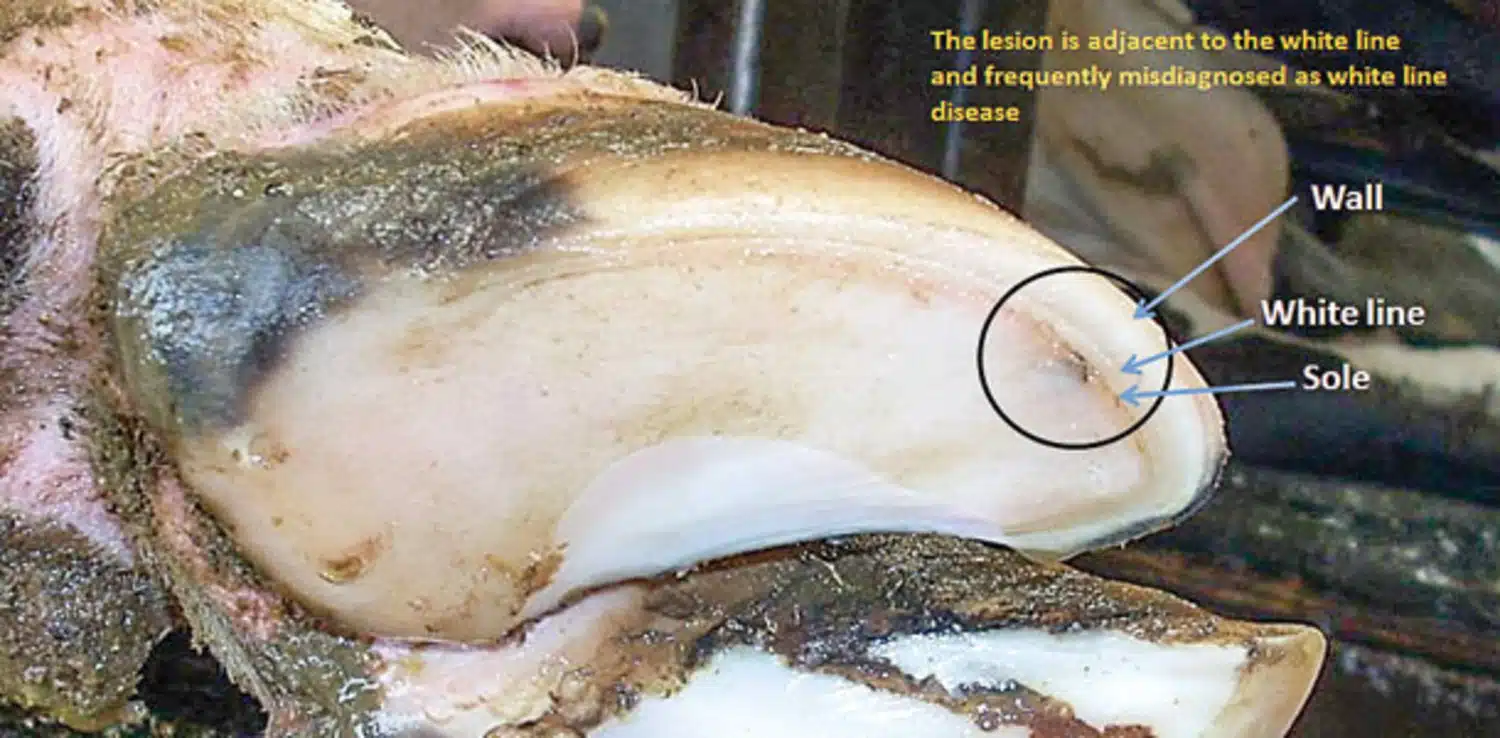
White Line Disease (WLD) in cattle is a common and painful claw condition that occurs when the hard hoof wall separates from the sole. White line disease happens when the hard outer part of the hoof starts to come apart from the bottom part. This usually occurs in the white line area, a weaker spot on the hoof. Walking on hard or slippery floors can put stress on the hoof and worsen it. When the white line gets damaged, a small gap forms. Dirt and germs can get inside through this gap, causing pain and making the animal limp. White line disease cattle suffer significant mobility and productivity issues if the condition is left untreated.
Related reading: White Muscle Disease In Cattle.
White line disease is a very common disease in dairy cattle, affecting 6 cows per 100 per year worldwide. If the animal is affected by white line, on average, a single case costs around £193($262), resulting in an estimated annual cost of over £1,000 per 100 cows. However, in herds where the condition is more prevalent—exceeding 30 cases per 100 cows each year—the financial impact can be much greater, reaching approximately £5,800 per 100 cows annually. This shows why it’s important to catch the disease early, treat it properly, and take steps to prevent it. Doing so can help lower how often it happens and reduce treatment costs.
White line disease cattle symptoms
Cattle with white line disease usually show clear signs, especially limping and damage to the hoof. The animal may walk unevenly or avoid putting weight on the sore foot. Pain and lameness are the main signs that something is wrong. Visually, affected hooves often show separation along the white line—the junction between the wall horn and the sole horn. Sometimes accompanied by bleeding or pus, especially if an abscess has developed. The area may appear bruised or darker in color, and in more severe cases, the separation can extend upward toward the coronary band.
Behaviorally, cattle may start limping, favoring the affected leg, or walking differently to take pressure off the painful hoof. White line disease appears on the back feet in about 90% of cases, and about 80% of those cases also affect the front feet. Some animals flat out refuse to put weight on the leg and show clear signs of discomfort when the hoof is pressed or tested. When the condition drags on and becomes chronic, the constant pain starts to take a toll in other ways, too. Affected cattle often eat less, become sluggish, and can appear visibly depressed.
Hoof in white line
- White line separation: A clear gap starts to form between the hoof wall and the sole, which is usually the first thing you will notice.
- Bleeding or pus: When you spot either of these coming from the area, it is a strong sign that an abscess has formed or the infection has already gotten pretty deep.
- Bruising or darkening: A discolored or bruised look along the white line, most commonly showing up around the outer hind claw.
- Hoof wall separation: In some cases, the separation extends toward the coronary band.
- Abscess formation: When things get really bad, swelling sets in, and pus starts to build up inside the hoof.

- Lameness: Limping or favoring one leg.
- Pain sensitivity: Especially evident when pressure is applied.
- Altered gait/posture: To avoid weight on the affected area.
- Reluctance to bear weight: On the affected foot.
- Depression or lethargy: Especially in chronic or untreated cases.

Causes of White Line Disease in Cattle
White Line Disease (WLD) in cattle is caused by damage to the white line, a soft, light-colored area in the hoof that joins the hard wall horn to the sole horn. Laminae make this area, and it’s a weak point in the hoof.
When the laminae get bruised or damaged, the white line weakens and starts to crack. This lets stones, dirt, and bacteria like Fusobacterium necrophorum and Arcanobacterium pyogenes work their way inside, leading to pain, infection, and lameness. Most WLD cases come down to physical pressure, poor flooring, wet conditions, thin soles, and poor nutrition.
1:Pressure, Twisting, and Sharp Surfaces
Every time a cow walks, turns, or pushes off on hard ground, the white line takes a beating. That constant twisting and pressure weakens the hoof over time, and bruising starts to develop. Rough or uneven floors only make the problem worse. Small stones and grit can work their way into cracks and carry bacteria deep inside, where abscesses and infections can start. The outer claw of the back feet tends to cop the worst of it since that is where most of the pressure falls.
2:Wet Conditions
When hooves stay wet for too long—like in muddy or dirty barns—the horn becomes soft and easier to damage. A wet horn doesn’t protect well and allows dirt and bacteria to enter the hoof more easily.
3:Thin Soles
Over-trimming or excessive hoof wear can make the sole too thin. A thin sole provides less protection and shifts more pressure onto the white line, increasing the risk of it breaking apart.
4:Poor Horn Quality (Nutrition Issues)
A healthy hoof depends on good nutrition. If a cow isn’t getting enough important nutrients like biotin and zinc, the hoof becomes weak and cracks more easily, especially at the white line, where the horn is already softer.
How It Gets Worse Over Time
The horn of the white line forms at the top of the hoof and descends about 5mm each month. Weak spots between the laminae’s folds often appear as dark lines or tracks where dirt can enter. These cracks can go deeper over time, reaching the sensitive inner parts of the hoof. When bacteria reach this area and can’t drain out, an infection may develop, leading to swelling, pain, and serious lameness.
Treatment of White Line Disease in Cattle
White Line Disease (WLD) in cattle can be painful and, if left untreated, can lead to serious hoof damage and long-term lameness. The main goal of treatment is to remove damaged horn, stop infection, reduce pressure on the injured hoof, and help the cow walk comfortably again. Below is a comprehensive guide to treating this condition effectively.
1. Hoof Cleaning and Functional Trimming
The first thing you need to do is trim the hoof and clear out any loose or damaged horn around the white line area. This opens the lesion and lets air in, which goes a long way toward preventing harmful bacteria from taking hold.
- Use a sharp hoof knife or rotary tool.
- Remove only the damaged horn—avoid cutting too deep or injuring healthy tissues.
- Open any cracks or crevices that may trap manure or stones.
- For deep lesions, trimming allows drainage of pus and relieves pressure.
Tip: Just be careful not to go too far with the trimming. The whole point is to remove the weak horn and uncover the clean, healthy tissue sitting underneath it.
2. Infection Control and Topical Treatment
After trimming, disinfect the area to prevent or treat infection. Some safe and effective products include:
Topical Treatment Purpose How to Apply
Copper sulfate powder kills bacteria, dries the lesion Pack in cotton or gauze inside the cavity
7% Iodine solution General antiseptic Spray or dab on trimmed area
Oxytetracycline spray Fights bacterial infection Spray directly on infected or smelly wounds
Hoof healing gels harden and heal horn Apply before covering with a bandage
Chlorhexidine or Hydrogen Peroxide (diluted) Flushes debris & infection . Flush before antibiotic use (optional).
3. Pain Relief Through Weight Redistribution
To reduce pain and help healing, apply a hoof block to the opposite (healthy) claw. This removes pressure from the damaged claw.
- Helps the cow walk better
- Speeds up healing
- Usually placed on the inner claw of the affected hind foot (since outer claws are more commonly affected)
4. Systemic Medications (If Needed)
If there is deep infection, pus, or swelling, systemic medications may be required in addition to hoof trimming and cleaning. Below is a table of widely used, vet-approved medications:
Generic Name Purpose Common Brand Examples (Global/US Market) Route & Use
Oxytetracycline (LA) Long-acting broad-spectrum antibiotic LA-200, Bio-Mycin 200, Noromycin 300 LA IM injection, typically every 72 hours
Flunixin Meglumine NSAID – pain and inflammation relief Banamine®, Flunixamine®, Vetameg™ IV or IM, once daily
Meloxicam Long-lasting anti-inflammatory Metacam®, Meloxidyl®, Loxicom® Oral bolus or subcutaneous injection
Always follow the veterinarian’s dosage guidance and withdrawal periods for milk or meat production.
Note: These medicines help the animal heal, especially if there’s an infection. But they can’t replace proper hoof trimming and cleaning of the infected area.
5. Follow-Up and Monitoring
- After treatment, check the hoof again in 7 to 10 days to assess healing progress.
- If it still looks dirty or sore, gently clean it and treat it again.
- Look at the hoof block — if the cow is walking better, you can adjust it or take it off.
- Full healing usually takes around 2 to 6 weeks, depending on how serious the injury was.
Deeper or Complicated Infections
In more serious cases:
- If pus or swelling is present above the hoof or near the coronary band, the lesion may need to be trimmed again for better drainage.
- If abscesses are deep or if the infection tracks up the wall, a veterinarian should be called.
- Sometimes, the wall must be partially removed under local anesthesia to clear infection from the deeper horn layers.
Best Practices for Recovery
- Feed a balanced diet that includes biotin, zinc, and copper, as these nutrients are what actually drive strong and healthy horn growth.
- Watch out for over-conditioning too, since carrying extra body weight puts a whole lot more strain on the hooves than most people realize.
- Record all cases with date, cow number, foot affected, and treatment.
- Ensure trained foot trimmers or vets handle moderate-to-severe cases.
Prevention of White Line Disease in Cattle
White Line Disease (WLD) is one of the leading causes of lameness in dairy cattle. It begins when the soft area between the wall and sole of the hoof becomes damaged or infected. Preventing this painful condition requires smart management of housing, flooring, cow flow, nutrition, and regular hoof care. Below are practical and proven ways to reduce the risk of WLD in your herd.
1. Improve Cow Comfort and Minimize Standing Time
Hard concrete and long hours on their feet are a bad combination for hooves. The less time cows spend standing around in collecting yards or waiting areas before milking, the better. Getting at least 12 hours of lying down each day gives their hooves a proper chance to recover from the daily pressure.
- Ensure clean, soft bedding and a well-designed cubicle.
- Aim for more cubicles than cows (at least 5% extra) to avoid overcrowding.
- Keep cows away from feed and cubicles for no more than 1 hour per milking.
2. Make Movement Safe and Stress-Free
Rough handling, tight turns, and pushing all stress the hooves out more than you’d think. Give cattle room to move at their own pace, and the white line stays under a lot less pressure.
- Widen walkways to allow cows to walk comfortably without turning sharply.
- Avoid shouting or rushing cows—let them move at their own pace.
- Use non-slip rubber matting in high-traffic areas (like parlour exits or tight corners).
- Adding cross passages or opening up any dead ends in the barn helps keep the cattle from crowding and reduces unnecessary stress.
3. Maintain Good Cow Tracks (for Grazing Herds)
For grazing herds, worn or stony tracks can lead to hoof injuries. Pay special attention to walking paths outside the barn.
- Cow tracks need to be free of stones, properly drained, and kept strictly for cattle, with no heavy machinery allowed through.
- Laying down astroturf or soft matting over any rough patches is worth considering if you want to protect the hooves.
- Keep a close eye on spots near gates and water troughs since that is where cows tend to bunch up and make sharp turns most often.
4. Support Hoof Health with Proper Nutrition
A cow’s diet plays a big role in hoof strength. Research shows that giving 20 mg of biotin per cow per day can reduce white line disease cases by up to 50%. However, results take time, usually 4–6 months, since a healthy horn needs time to grow.
- Keep a close eye on body condition during early lactation, as cows that lose too much weight too fast lose the cushioning in their hooves as well.
- Biotin, zinc, and copper should always be part of the feed since these are the nutrients that actually keep hoof quality up and bruising down.
- Try to avoid sudden changes in diet, especially anything that could trigger subclinical rumen acidosis (SARA), as this can quietly wear down hoof health from the inside out.
5. Perform Regular and Strategic Hoof Trimming
Preventative hoof trimming keeps hooves balanced and helps spot early signs of WLD before it worsens.
- Trim hooves at least twice a year or as recommended by a professional trimmer.
- Train staff or hire accredited hoof trimmers who follow safe trimming practices.
- Never delay trimming in cows that show early signs of discomfort or uneven walking.
Conclusion: White Line Disease in Cattle
White line disease in cattle does not have a single cause. It comes down to a mix of structural weaknesses, mechanical stress, and the conditions in which cattle are kept. It does not spread from one animal to another, but leaving it unmanaged can really take a toll on how the whole herd moves, feels, and performs. Spotting it early through regular hoof checks, along with proper trimming, treatment, and care, is key to managing it well. Long-term control depends on proactive prevention strategies—balanced nutrition, clean housing conditions, and proper hoof maintenance. Good hoof health is closely linked to how well an animal performs, so it’s important to treat white line disease in cows with proper and regular care. With early spotting and the right treatment, this problem can be managed and greatly reduced in both dairy and beef herds.
