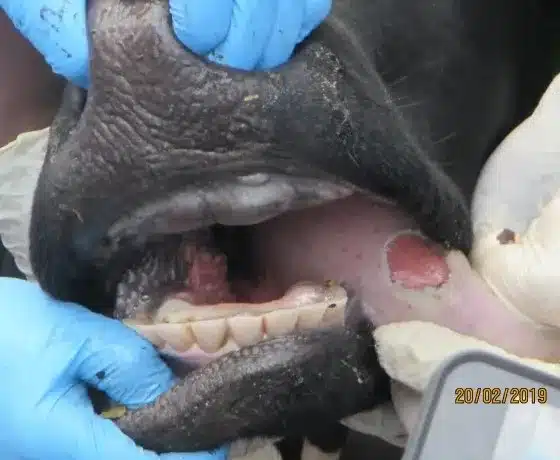
Foot-and-mouth disease in cattle is a serious and highly contagious viral disease that affects livestock. FMD in cattle spreads quickly and can cause major economic losses, especially in cattle farming and trade. FMD disease in cattle is caused by a virus that mainly affects even-toed animals, both domestic and wild. Infected Cattle develop a high fever that lasts 2 to 6 days. However, this illness in FMD cattle can be longer, ranging from 7 to 10 days. This is followed by the formation of painful blisters (vesicles) in the mouth, on the tongue, lips, and around the hooves. These blisters can burst, leading to sores that make it difficult for animals to eat, walk, or move—often causing lameness.
Foot and mouth disease (FMD) in cattle is a fast-spreading viral infection caused by the foot and mouth disease virus (FMDV), known scientifically as Aphthovirus, from the Picornaviridae family. There are seven different types (serotypes) of this virus: A, O, C, SAT1, SAT2, SAT3, and Asia1. Among them, serotype C has not been reported since 2004, suggesting it may no longer be active. However, the other serotypes still exist in various parts of the world. Each serotype of FMD virus is different, and animals must be vaccinated with a specific vaccine that matches the strain to gain protection. Because of this, controlling foot and mouth disease in cattle can be challenging, especially in areas with limited resources.
Foot and Mouth Disease Short History
Foot and mouth disease for cattle has a long history, with records tracing back to the sixteenth century when it was recognized as a serious threat to livestock. In 1898, scientists Loeffler and Frosch discovered that the illness was caused by a submicroscopic, filterable agent, making the foot and mouth disease virus the first known virus affecting vertebrates, shortly after the discovery of the tobacco mosaic virus in plants. By 1920, guinea pigs were introduced as a model for studying the virus, which later led to the development of cell culture systems.
The complete 3D structure of the foot and mouth disease virus in cattle was described in 1989. The United States first encountered the disease in 1870 and successfully eradicated it by 1929. Over time, FMD became one of the most studied animal diseases, with the World Reference Laboratory for FMD established in Pirbright, UK, conducting global monitoring through serotyping and genotyping of viral strains
Foot and Mouth Disease Symptoms in Cattle
The first visible signs of foot and mouth disease in cattle are fever, heavy drooling, loss of appetite, shivering, and lameness. These symptoms tend to show up early, along with a sudden drop in milk production, reddening of the mouth’s mucous membranes, and the beginnings of blisters in the mouth or on the feet. The quick tansmission in head make it much dangrous. In confined or closely grouped cattle, once one animal starts showing these signs, others are not far behind.
The painful blister is also one prominent sign of FMD which show up in severl part of body. They tend to form in the mouth on the lips, tongue, and gums, as well as between the toes, near the hooves, on the teats, and at common pressure points. Once these blisters burst open, affected cattle often struggle to move, lose the ability to walk normally, and have a really hard time feeding properly. While many animals do pull through within a week, the open lesions left behind can invite bacterial infections that make the whole healing process a lot more complicated.
As FMD takes hold and progresses, cattle start losing weight fast, and the effects on growth and milk production can stick around for a long time, with drops of up to 80% in some cases. Bulls are not spared either, as testicular swelling can develop and end up affecting the health of dependent calves down the line.
Young animals tend to have the hardest time of it since reduced milk availability puts their survival and early development at serious risk. Even when cattle do manage to recover, foot and mouth disease in cattle has a way of leaving lasting productivity losses behind that hit both herd health and farm economics pretty hard.
Causes of Foot and Mouth Disease in Cattle
It is caused by the Foot and Mouth Disease Virus (FMDV), an RNA virus belonging to the Aphthovirus genus of the Picornaviridae family. This highly contagious virus primarily targets cloven-hoofed animals and poses a serious threat to both small-scale farmers and large commercial producers. What makes FMDV particularly difficult to deal with is its ability to spread rapidly through multiple biological and environmental channels, making foot and mouth disease in cattle one of the hardest livestock diseases to bring under control.
One of the main causes behind foot and mouth disease outbreaks in cattle is how long FMDV can survive in the environment. The virus holds on in contaminated soil, feed, water, and on surfaces like fencing, floors, and troughs, turning these areas into persistent sources of infection that put healthy cattle at risk even when no visibly sick animals are around.
Diagnosis of Foot and Mouth Disease (FMD) in Cattle
Quick and accurate diagnosis of Foot and Mouth Disease (FMD) is very important. Finding the disease early helps start control measures right away and stops it from spreading through herds and to other areas.
Clinical Observation and Initial Signs
Diagnosing FMD in cattle starts with taking a close look at the animal’s clinical signs. Infected cattle commonly show:
- Fever, typically sitting between (40 and 41°C or 104 and 106°F)
- Excessive salivation and stringy drool
- Blisters (vesicles) in the mouth, tongue, dental pad, nostrils, teats, and between the hooves
- Lameness, reluctance to move, or lying down due to painful foot lesions
- Loss of appetite and decreased milk production
These symptoms can show up anywhere between 2 and 14 days after the animal has been exposed to the virus. Isolate any cattle showing suspected signs straight away and handle them with care, since FMDV spreads fast through direct contact, aerosol droplets, and contaminated equipment.
Laboratory Confirmation of FMD Virus
Confirming foot and mouth disease in cattle comes down to collecting the right samples and running the right tests. The best sample to go for is skin tissue or fluid taken directly from the blisters. Place at least 1 gram of tissue in a suitable solution like phosphate-buffered saline or a glycerol-buffer mix with a pH of 7.2 to 7.6. Keep samples cold and transport them on ice to preserve their integrity.
When visible blisters are not present, you can collect oropharyngeal fluid using a probang cup or a throat swab instead. You can also test blood samples, though the virus only stays detectable in the blood for a short window of time. You usually need to repeat throat sampling in animals that have already recovered but may still be carrying the virus to get a reliable result.
Sample collection tips
- Best sample: vesicular epithelium or fluid (you’ll want at least 1 g)
- PBS or glycerol buffer works best for storage (aim for pH 7.2–7.6)
- Make sure to keep samples cold while transporting them
- If there aren’t any vesicles, oropharyngeal swabs will do the job
- Blood samples are useful only in early infection
- Repeated testing may be needed for carriers
In the lab, technicians use real-time RT-PCR as the main test because it detects even small amounts of virus with high sensitivity, even in poorly preserved samples. Researchers also use antigen ELISA tests to detect the virus and determine its type (serotype).
In more advanced laboratory settings, scientists analyze the virus’s genetic code to identify the exact strain and may also grow the virus in cell cultures for a closer look. For situations where you need results quickly out in the field, lateral flow devices can detect virus antigens right on the spot without sending samples off to a lab. Serology, which involves testing for antibodies, comes into play when confirming an infection, checking how well a vaccine is working, or meeting the requirements for trade certification.
However, only nonstructural protein antibodies (which real infection produces) can indicate if an animal was infected, since vaccines also produce structural protein antibodies. These tests may miss infection in vaccinated animals if virus replication is very low.
Lab tests used
- RT-PCR: Very accurate, detects virus RNA
- Antigen ELISA: Finds virus type
- Sequencing: Identifies strain and lineage
- Virus isolation: Confirms live virus
- Lateral flow tests: Quick, on-site results
- Serology:
- Nonstructural protein antibodies = real infection
- May miss mild infections in vaccinated animals
Treatment of Foot and Mouth Disease (FMD) in Cattle
Once you identify Foot and Mouth Disease in cattle within a herd, treatment and control should begin immediately. Since the disease is viral, there is no specific cure for the virus itself. Still, supportive care, symptom management, and infection control can help the affected cattle recover and prevent the spread to other animals.
First, remove infected animals from the rest of the herd. Keep feeding and watering equipment completely separate and make disinfecting affected areas and equipment part of your daily routine. When doing your rounds, always start with the healthy animals and finish with the sick ones. It is one of the simplest ways to stop the virus from working its way through the rest of the farm.
Supportive Treatment for FMD in Cattle
Supportive care for FMD in cattle comes down to managing fever, easing pain, treating wounds, keeping animals hydrated, and preventing secondary infections from taking hold.
Fever and Pain Management
Non-steroidal anti-inflammatory drugs (NSAIDs) are used to control fever, inflammation, and pain caused by the mouth and hoof lesions seen in foot and mouth disease cattle.
Common NSAIDs Used:
- Flunixin meglumine
- Meloxicam
Administer these medications based on the animal’s weight and condition. Treatment usually continues for 3–5 days. These drugs help reduce discomfort and improve the animal’s appetite and mobility.
Wound Cleaning and Care
Painful blisters and ulcers tend to show up in the mouth, between the hooves, and on the teats. Keeping these wounds clean and protected is really important since open sores left unattended can quickly turn into bacterial infections that make things a whole lot worse.
How to Clean Wounds:
- A diluted solution of povidone-iodine or potassium permanganate (KMnO₄) works well for cleaning the affected areas.
- Gently clean the wounds twice a day and do not rush the process.
- Follow up with an antiseptic spray, zinc oxide cream, or a healing ointment to help the tissue repair itself and keep flies away from the open sores.
Antibiotics for Foot and Mouth Disease
FMD is viral disease but antibiotics for foot and mouth disease may be prescribed to prevent or treat complications like foot rot, mastitis, or pneumonia.
Antibiotic Name Route Common Brands (varies)
- Oxytetracycline IM/IV Terramycin, Alamycin
- Penicillin-Streptomycin IM Pen & Strep, Combi-Pen
- Amoxicillin IM/IV Polyflex,
- Ampicare
Common Antibiotics Used for FMD:
Give these antibiotics by injection for 3–5 days, depending on how severe the infection is. Always follow veterinary advice and dosage instructions strictly.
Immune and Nutritional Support
Boosting the animal’s immune system helps fight the virus and recover faster.
Recommended Supplements:
- Vitamin A, D, and E
- Zinc and Selenium
- Electrolyte solutions
You can administer these orally or through injection, and they help heal wounds, restore energy levels, and fight infection.
Vaccination Against Foot and Mouth Disease
Vaccination is not a cure for infected cattle, but it is critical for preventing further infections in healthy animals and controlling the spread of the virus on the farm. It’s also a key strategy in areas where foot and mouth disease outbreaks in cattle are frequent.
Common FMD Vaccine Formula (USA & Europe)
The core formula of an FMD vaccine used across both the United States and Europe follows a similar base structure, though regulatory standards and adjuvant preferences may vary slightly by region:
Core Ingredients:
- Inactivated FMD Virus Antigen – The active component; live FMD virus is chemically killed (usually with BEI — Binary Ethylenimine) so it can no longer cause disease but still triggers immune response
- Adjuvant – Either:
- Aluminum Hydroxide (Al(OH)₃) — used in cattle and small ruminants (not effective in pigs)
- Oil Emulsion (Water-Oil-Water) — used across all species including pigs; preferred in Europe
- Purified Non-Structural Protein-Free Antigen – Required for DIVA compatibility (both USA & EU regulatory bodies prefer this)
- Stabilizers/Excipients – Saponin, sorbitol, or similar compounds to maintain shelf life and potency
Potency Standard:
- USA (APHIS): ≥6PD50 per dose (emergency/high-potency)
- Europe (EMA/OIE): ≥6PD50 per dose for outbreak response; ≥3PD50 for routine endemic use
Both USA and EU require vaccines to be DIVA-compatible and meet OIE potency standards before approval for emergency deployment.
Incubation Period of Foot and Mouth Disease
The incubation period for foot and mouth disease in cattle runs anywhere from 2 to 14 days after exposure, and that gap varies depending on the virus strain and the animal’s immune condition. The tricky part is that cattle can already be passing the virus on to others before a single symptom appears. That alone is reason enough to act fast on isolation and biosecurity the moment anything seems off in the herd.
Foot and Mouth Disease Transmission in Cattle
Transmission of foot and mouth disease in cattle is something that can get out of hand before most farmers even notice something is wrong. An infected animal shedding the virus through coughing, drooling, feces, or milk is really all it takes for the cattle around it to pick it up through their skin, mouth, or respiratory system.
FMD isn’t just about direct contact. In humid or closed areas, the virus gets into the air through aerosol droplets, which is why crowded herds where animals are packed in tight are at high risk. Dirty feed and water spread it around, too, and farm workers can unknowingly pass it on their hands and clothes from one animal to the next without even knowing.
Shared tools, footwear, vehicles, and feeding troughs can all pick up and spread the virus if you’re not careful about disinfecting them properly. Even an animal or person that looks perfectly fine can have been around an infected herd and bring it straight onto your farm. That’s why strict biosecurity measures, keeping up with disinfection, and controlling how animals and people move around are so critical—they’re basically what keep your herd safe from an FMD outbreak.
Foot and Mouth Disease Prevention in Cattle
Prevent FMD by controlling who and what enters your farm. A contaminated boot, an unwashed vehicle, or even a worker visiting from another property can carry the virus in without anyone noticing it. Limiting farm access and staying on top of disinfection every single time is really what keeps the door closed on an outbreak.
New animals and those returning from elsewhere should never go straight into the main herd. Two weeks in quarantine is enough time to catch anything still sitting in the incubation stage before it gets a chance to spread.
Cleaning and disinfecting cattle housing and feeding areas regularly makes a real difference. Disinfecting handling tools also stops the virus from surviving. Waste, dead stock, and manure have to be disposed of properly—if you’re not careful, they become major contamination sources fast. When risk is high, lock down animal movement, keep visitors out, and train your farm staff to spot early FMD symptoms so you can catch it before it spreads.
Vaccination is the most effective tool in areas where FMD keeps popping up. Antibiotics won’t do anything against the virus, but they help when secondary infections come into play. What really matters most is never letting the virus get a foothold in the first place. Keep a daily eye on your animals, act the moment something looks wrong, and never let vaccination records slip. FMD moves fast, and one thing missed at the wrong time can bring the whole herd down. It can also take the farm finances with it.
Environmental Disinfection and Farm Biosecurity
To stop the virus from spreading, thorough cleaning and disinfection of all farm areas and tools is essential.
Disinfectants Used:
- 4% Sodium Carbonate (washing soda)
- 0.2% Citric Acid Solution
- Bleaching Powder (calcium hypochlorite)
Go over sheds, feeding equipment, milking areas, and footwear with these every day. Burn contaminated bedding and feed or bury it deep enough so nothing can get back into contact with it.
Field Protocol for Vets and Farmers
Veterinarians and farm personnel should follow these key diagnostic steps:
- Remove any suspected animals from the rest of the herd immediately.
- Write down what clinical signs you are seeing and how they are developing over time.
- Contact veterinary authorities the moment FMD is suspected and do not wait for things to get worse.
- Collect samples safely while wearing protective gear.
- Send samples to an approved FMD reference laboratory.
- Implement movement restrictions and biosecurity on the farm.
Conclusion of foot and mouth disease
Foot and mouth disease is one of those diseases that spreads fast through cattle herds. Most farmers don’t catch what’s happening until the disease has already done significant damage. It spreads quickly and moves through herds in ways farmers often miss. The damage it does to productivity can take months or even years to bounce back from. There is no specific cure for it, which makes prevention critical. Early detection, vaccination, and tight biosecurity are the most powerful tools available for keeping it under control.
Supportive care goes a long way in helping animals pull through and avoiding complications along the way. Bringing FMD under control is not something anyone can do alone. It takes farmers, veterinarians, and authorities all working together to protect animal health. Keeping the livestock industry on its feet depends on this collaboration.
Related reading: Footrot Disease in Sheep: Symptoms & Prevention.
Related reading: Sore Mouth Disease in Sheeps and Goats.
