Bottle jaw in sheep is a soft, pitting swelling under the lower jaw. It happens when anemia and low blood protein are severe enough that fluid leaks into the loose tissue there. The blood-feeding barber pole worm, Haemonchus contortus, is the classic cause, and infestation can become fatal by mid-July if left untreated. Any sheep showing bottle jaw needs a veterinary examination and treatment the same day; home remedies will not reverse the underlying anemia.
What does bottle jaw look like on a sheep?
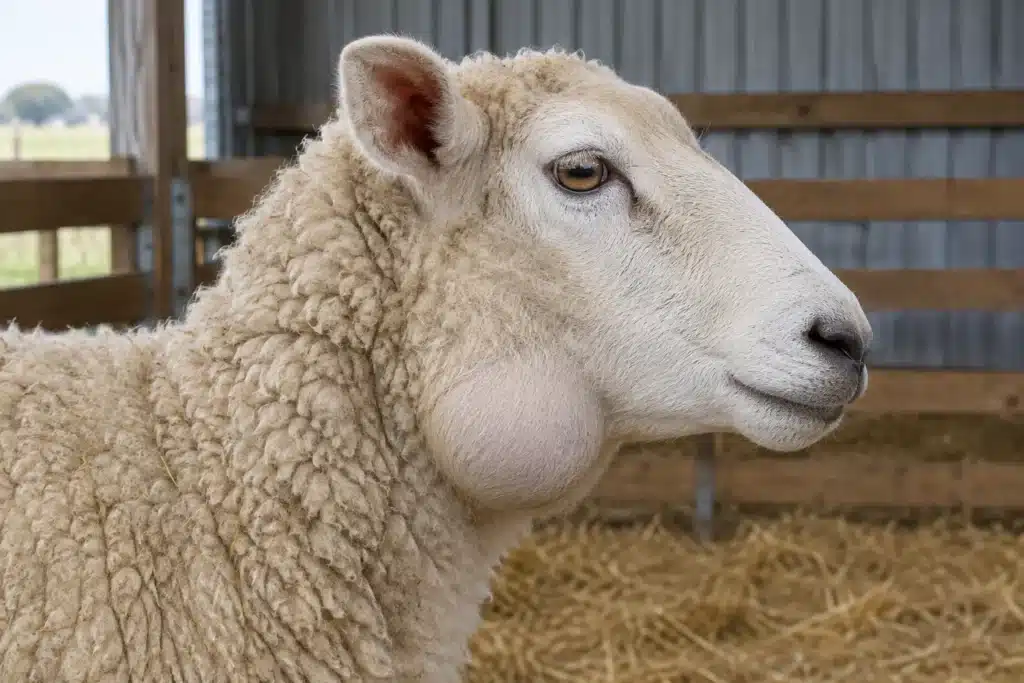
Bottle jaw is a soft, pitting fluid swelling under the lower jaw of a sheep or lamb. It’s caused by anemia and low blood protein severe enough that fluid leaks into the loose tissue there. When you press your thumb into the swelling, the indent stays for a moment before filling back in. That pitting is the key sign. The swelling is painless and does not feel hot or hard like an abscess would; it feels like a water balloon under the skin.
 AI-generated
The classic cause is the barber pole worm, Haemonchus contortus, a blood-feeding worm that lives in the abomasum (the fourth stomach chamber) of sheep and goats (thuenen.de). This worm is particularly dangerous because it drinks blood directly from the animal’s stomach lining. It drives anemia so severe that it can kill lambs and adult sheep by mid-July if untreated. A sheep with bottle jaw is already losing this battle and needs attention the same day you spot it. The swelling itself is not the disease. It’s a sign that the animal’s blood protein has dropped so far that fluid is leaking out of the bloodstream into the tissues. It collects under the jaw, the most visible place on a thin-skinned animal.
What causes bottle jaw, and is it always the barber pole worm?
Barber pole worm is the main cause of bottle jaw that you will see in your flock. This worm feeds on blood in the abomasum and drives anemia severe enough to be fatal by mid-July if left untreated.
Other conditions that can all lower blood protein enough that fluid collects in the tissues can cause a similar swelling under the jaw
- Liver fluke,
- chronic protein loss from poor feed or prolonged illness, and
- a handful of other parasites or nutritional shortfalls
But the problem is that bottle jaw itself does not tell you which one is happening in your animal. A sheep with a swollen jaw and pale eye membranes is most likely dealing with barber pole worm. This is especially true during the warm months when these worms build up fastest. If an animal has a swollen jaw and does not look as pale as you would expect, the cause may be different. The same is true if several animals in your flock are affected at once in late fall or winter when barber pole worm is usually quiet.
Sorting out which cause is at work is a job for your vet or your extension office. Don’t guess at it with a home remedy. A vet can run a fecal test, check the animal’s blood work, or do a physical exam that rules things in and out. This matters because the treatment is completely different depending on what is wrong. Dewormers will save a sheep with barber pole worm but will do nothing for a sheep losing protein to liver fluke or malnutrition. Getting it right the first time means the animal survives.
How do you tell which sheep actually need treatment today?
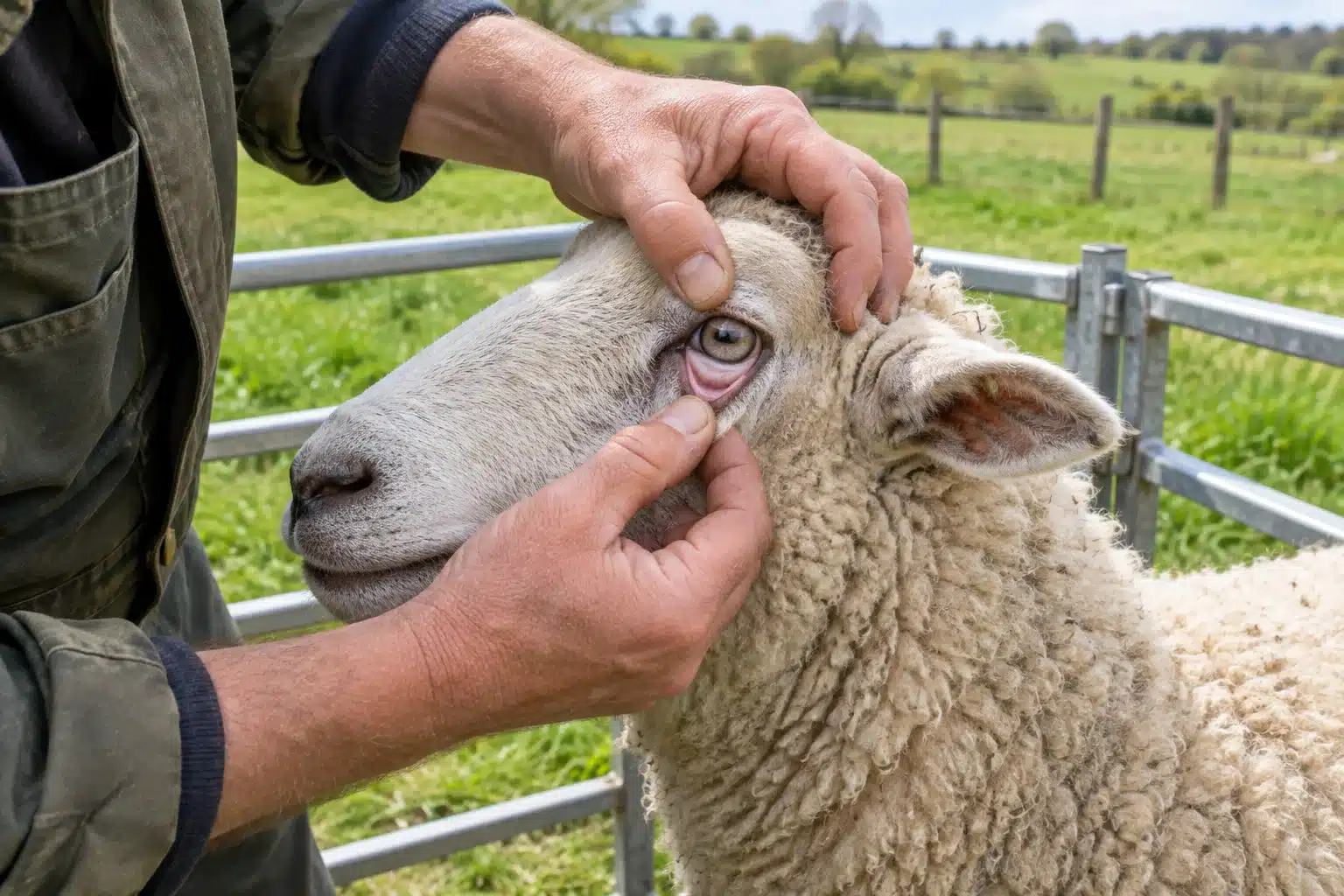
Use the FAMACHA color chart to check the inner eye membrane of any sheep showing signs of anemia or poor body condition. Treat only the animals scoring pale. The FAMACHA color chart compares the conjunctiva (the mucous membrane lining the inner eyelid and covering the white of the eye) against five standard color grades. They range from red (not anemic) to very pale (heavily anemic) to identify animals that may need deworming. The chart was built specifically to catch anemia caused by Haemonchus contortus, the blood-feeding barber pole worm.
To use it, lift the lower eyelid of the sheep and match the color of the conjunctiva to the color card. The five values are: 1 = red (not anemic); 2 = pink-red (not anemic); 3 = pink (moderate/suspicious); 4 = pale-pink (anemic); 5 = very pale (heavily anemic). Treat animals scoring 4 or 5.
Here is the catch: the FAMACHA chart is not perfect. A German field study from 2002 to 2005 found that while the test caught every animal that was severely anemic (crucial for a screening tool), it also flagged many animals that were not truly anemic. The false-positive rate was 42% in sheep and 65% in goats. The relationship between the FAMACHA score and the animal’s actual blood hematocrit (the percentage of red blood cells in the blood) was only low to moderate. A pale score on the chart does not guarantee the animal has dangerous anemia. A normal score does not guarantee the sheep is safe.
The FAMACHA chart also tells you nothing about worm species other than Haemonchus contortus. If your sheep are infested with other gastrointestinal worms, this test will not catch them. It also does not give a reliable prediction of how many worms are actually inside the animal based on worm egg counts in the feces. The chart is built to flag animals that look pale, and that is what it does well. Whether that paleness means dangerous anemia from Haemonchus, from another parasite, or from something else entirely is a question your vet needs to answer.
Does a fecal egg count tell you what you need to know?
A fecal egg count is a laboratory test of the manure that counts worm eggs present in the sample. It’s an unreliable way to decide which animals need deworming, because egg output does not tell you how many worms are actually inside the animal. Two sheep with the same egg count can carry very different parasite burdens. An animal shedding few eggs may still carry enough worms to cause severe anemia.
A fecal egg count and a FAMACHA check catch different kinds of problems. The FAMACHA chart flags pale animals that may be anemic from blood loss. A fecal egg count estimates eggs in the manure on a given day. Neither one tells you the complete picture on its own. A sheep can score pale on FAMACHA but shed few eggs. Or it can shed many eggs without looking pale yet. Neither test stands alone to decide treatment. Your vet uses both together, along with how the animal looks and feels, to decide whether deworming is needed and when.
What do you do today when you find a sheep with bottle jaw?
Call your vet the same day. Any sheep showing bottle jaw with a pale FAMACHA score needs treatment for the anemia driving the swelling, since Haemonchus contortus infestation severe enough to cause bottle jaw can be fatal by mid-July if left untreated. The vet will prescribe an anthelmintic, a medicine that kills or removes worms from the digestive tract, and set the withdrawal period, which is the time after treatment before the animal’s milk or meat can be legally sold. The product label and your vet decide both the dose and the withdrawal period; do not guess at either one at home.
At the flock level, you have a choice about how many animals to treat. You can treat only the sheep that score pale on FAMACHA, or you can treat the whole group. Treating only the animals that actually need it (selective treatment instead of blanket deworming) cuts dewormer use by up to 90% while also slowing the buildup of anthelmintic resistance. Resistance is the ability of worm populations to survive treatments that once killed them. This problem has grown increasingly common in small ruminants because the same few active ingredients have been used for decades. When you treat every animal whether they show signs or not, you expose more worms to the medicine. The ones that can survive it breed the next generation. Selective treatment means fewer worms face the drug, so fewer resistant ones survive to reproduce. Over time, this slows the spread of resistance in your flock and reduces the amount of medicine you buy and use.
The vet will also help you rule out other causes of bottle jaw, liver fluke, chronic protein loss, or other conditions, if the FAMACHA score does not match what you see in the animal or if treatment does not improve it within a reasonable time.
How do you stop the next case of bottle jaw in the flock?
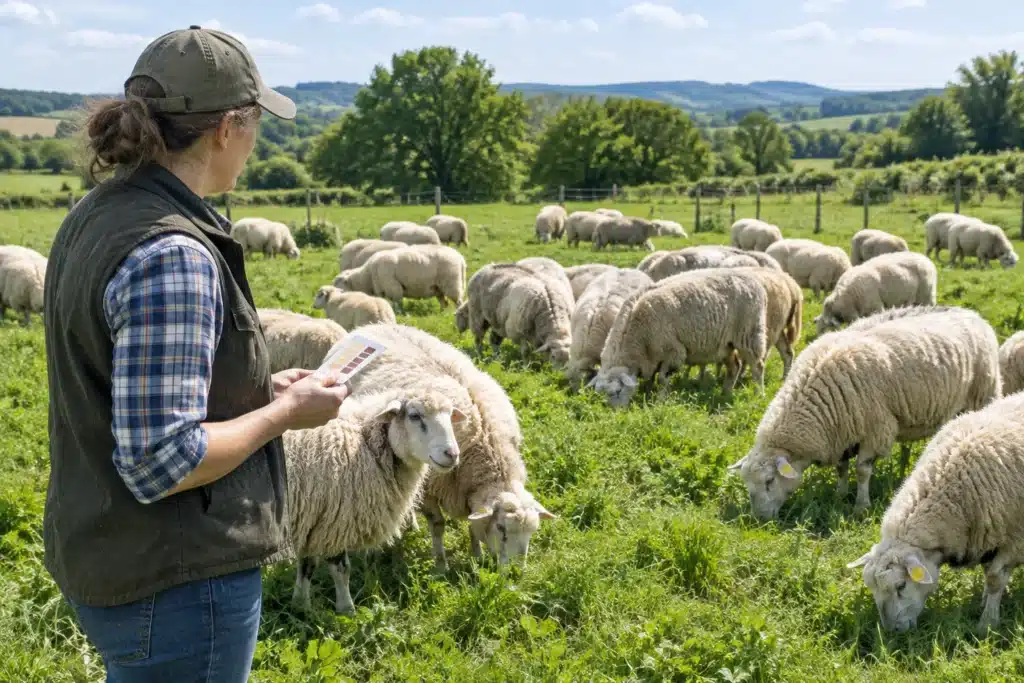
Start FAMACHA checks well before mid-July. Haemonchus infestation builds to fatal levels by then in many regions, and a swollen jaw means the damage is already done. Waiting until you see a sick animal wastes the window to catch anemia early, when treatment still prevents death. Check eye membranes every two to three weeks from late spring onward, depending on your region’s typical parasite season and what your pasture history shows. Your extension office can tell you when the risk peaks where you farm.
 AI-generated
Routine FAMACHA checks matter most on organic operations. Worm infestation is by far the most common disease issue in organic sheep flocks. If you cannot use anthelmintics on a calendar schedule, regular eye checks are your only way to catch animals before they crash.
Selective treatment (deworming only animals that score pale on FAMACHA instead of treating the whole flock) cuts dewormer use by up to 90% while slowing the buildup of anthelmintic resistance. Treating fewer animals means fewer resistant worms survive each round. This eases the pressure that drives resistance forward on your place.
Keep treatment records so you know what was given and when
After treatment, record the product, dose, date and withdrawal period for each animal so you know when milk or meat can be sold. Health and treatment tracking in Animals Farming keeps those dates in one place and reminds you when the withdrawal period ends.
